
CBS Evening News recently aired a touching story about Myles Eckert, an 8-year old Ohio boy who found $20 in the parking lot of a Cracker Barrel. He was delighted with his find and thought of the things he might buy. And then he saw a man in a military uniform. He wrote a short note explaining why he was giving the $20 to the soldier. He told the soldier his father also was a soldier, but that he was in Heaven. As it did to countless others, it touched me.
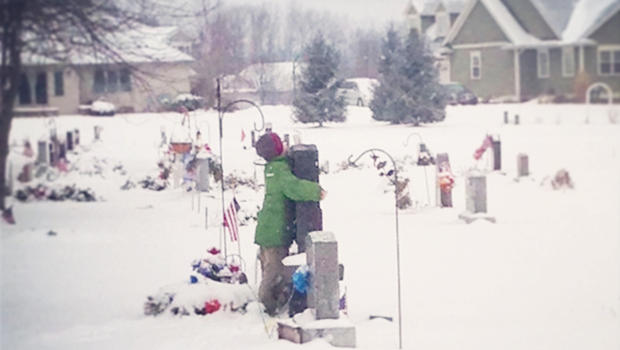
But what truly resonated with me was Myles’ comment that he imagined “him as a really nice person and somebody that would be really fun.” Myles’ father died days after he was born. For him, his father lives in his imagination, in the memories of family and friends and in small items his father left behind.
I have more real memories than Myles does. Yet, like Myles and many other children whose parents die before they reach either their teen or adult years, we see that individual through a lens that merges fact with fiction. To this day I struggle to differentiate between the two.
On the positive side, my dad can be anything and everything a girl would want in the most important man in her life. On the less-than-positive side, there is that lingering feeling of being cheated by time, as well as my own mind. Why can’t I remember the sound of his voice? Why can I remember the times when his anger flourished, but not the more frequent occasions of laughter.
It is a feeling similar to the unnerving sense that often occurs when you awaken from a deep sleep. Did that really happen or was I dreaming? Particularly if your dreams, like mine, border on the patently asinine and include a healthy dose of the absurd.
That struggle is one reason why I cherish, like the soldier in the story, the notes and letters that survived countless moves and spring cleanings. A few years ago my father’s sister Barbara sent me a few letters she had unearthed. There was a letter sent by my father to his parents expressing concerns he had about his decision to relocate to London. At the time, my brother was a toddler and his words were shaped by worry for his wife and his young son.
I am a bit old-school in that I lament the loss of the art of writing letters in this age of Twitter and no-caps emails. Not only do the words on the paper afford me an invaluable insight into the relationship he had with his mother and father, they allow me to imagine him as a young man with the same worries many parents have about providing for their children.
So much can be learned from the formulation of sentences, the words and phrases he chose. He penned the letter in cursive and in a handwriting that would lead the reader to believe he was a doctor and not an ad exec.
Not all of the letters were long. Some were short notes and a postcard or two sent by a young man on a cross-country drive to California. But none is more valuable than another. They feed my imagination and a heart that hungers to this day to better understand who the man I call Dad was.


 Sometimes Life Is Just Like A Marathon